Fuel spill exercise strengthens joint response at 386th AEW
U.S. CENTRAL COMMAND AREA OF RESPONSIBILITY --
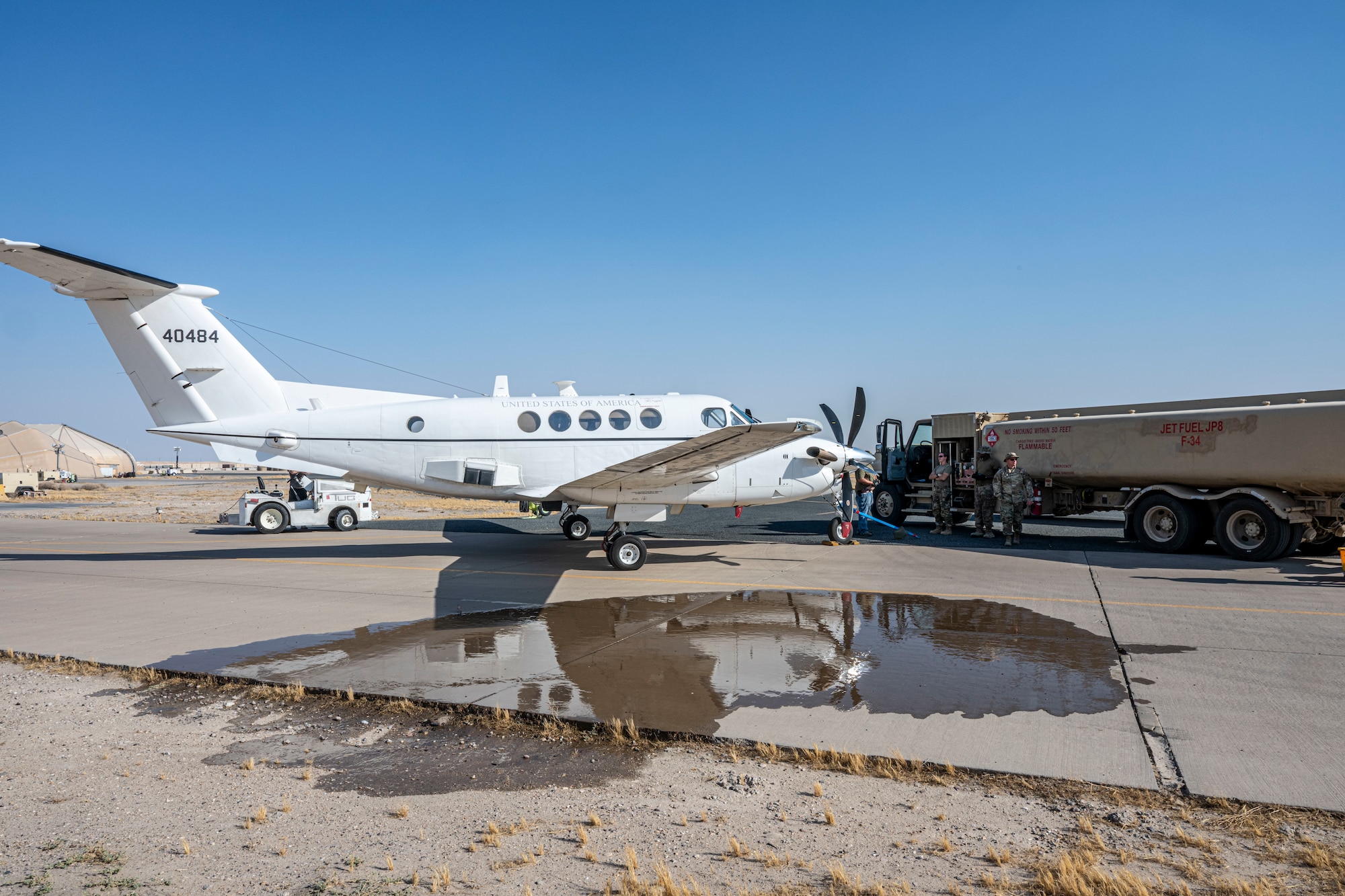
The scenario simulated a fuel spill during the refueling of a C-12 aircraft, requiring immediate coordination between Army flight operations, the 386th Expeditionary Logistics Readiness Squadron’s fuel team and the 386th Expeditionary Civil Engineering Squadron’s firefighting teams. The exercise activated each organization’s pre-mishap plans, validating procedures while providing first responders with valuable hands-on training.
“This was more than an annual requirement,” said Chief Warrant Officer 3 Mikey Lansink, C-12 RFC operations officer. “The goal was to make sure that when things don’t go right, everybody knows their role in keeping people safe. The only way to get faster and more efficient is by practicing.”
Responders faced realistic hazards associated with an aircraft fuel spill, including environmental contamination, health risks and the potential for fire or explosion. Firefighters deployed trucks onto the flight line, while fuels specialists executed containment measures and Army flight operations staff relayed critical information through the chain of command.
“The training went really well,” said Senior Airman Jorel Taylor, 386th ECES crew chief. “We created an initial call and responded as normal. Getting the chance to actually see the aircraft was a big help. Being able to go through and see what was wrong, how much fuel was leaking, and then apply our procedures all benefits us as a fire community..”
For some Soldiers, this training was a first-time experience.
“As the exercise went on, I got more confident with the calls and how to relay information,” said Spc. Carter Smith, C-12 RFC flight operations specialist. “If something like this ever happens for real, I’ll know exactly what to do.”
Chief Warrant Officer 3 Mark Escherich, C-12 RFC aviation safety officer, emphasized that the training also provided an opportunity for cross-unit familiarization. After the exercise, he walked firefighters through the C-12’s emergency systems, including fuel ports, battery access points and engine shutdown procedures.
“Having that face-to-face time matters,” Escherich said. “If firefighters are ever first on scene, now they know how to secure the aircraft and mitigate hazards quickly.”
The exercise highlighted both successes and areas for improvement. Units identified differences between Army and Air Force fuel spill policies, validated contact information and updated communication processes to account for frequent personnel rotations.
“Bottom line: The faster you can get first responders on scene with the right information, the more likely you are to save lives,” Lansink said. “That’s why we practice.”
U.S. Airmen and Soldiers from the 386th Air Expeditionary Wing and C-12 Regional Flight Center conducted a joint fuel spill exercise, testing emergency response procedures and strengthening interoperability across units within the U.S. Central Command area of responsibility, Sept. 9, 2025.
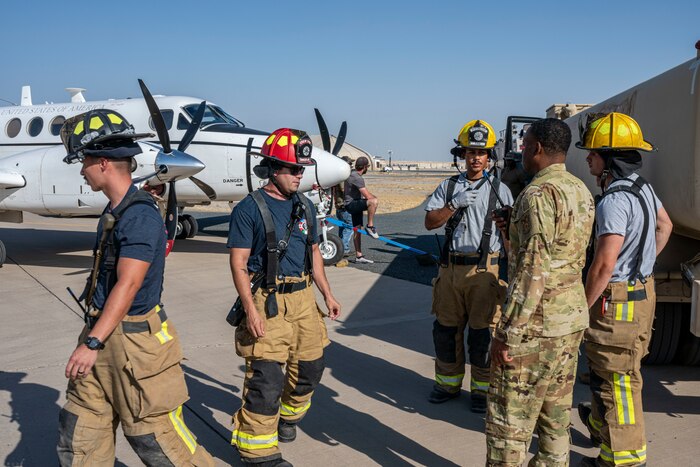
The scenario simulated a fuel spill during the refueling of a C-12 aircraft, requiring immediate coordination between Army flight operations, the 386th Expeditionary Logistics Readiness Squadron’s fuel team and the 386th Expeditionary Civil Engineering Squadron’s firefighting teams. The exercise activated each organization’s pre-mishap plans, validating procedures while providing first responders with valuable hands-on training.
“This was more than an annual requirement,” said Chief Warrant Officer 3 Mikey Lansink, C-12 RFC operations officer. “The goal was to make sure that when things don’t go right, everybody knows their role in keeping people safe. The only way to get faster and more efficient is by practicing.”
Responders faced realistic hazards associated with an aircraft fuel spill, including environmental contamination, health risks and the potential for fire or explosion. Firefighters deployed trucks onto the flight line, while fuels specialists executed containment measures and Army flight operations staff relayed critical information through the chain of command.
“The training went really well,” said Senior Airman Jorel Taylor, 386th ECES crew chief. “We created an initial call and responded as normal. Getting the chance to actually see the aircraft was a big help. Being able to go through and see what was wrong, how much fuel was leaking, and then apply our procedures all benefits us as a fire community..”
For some Soldiers, this training was a first-time experience.
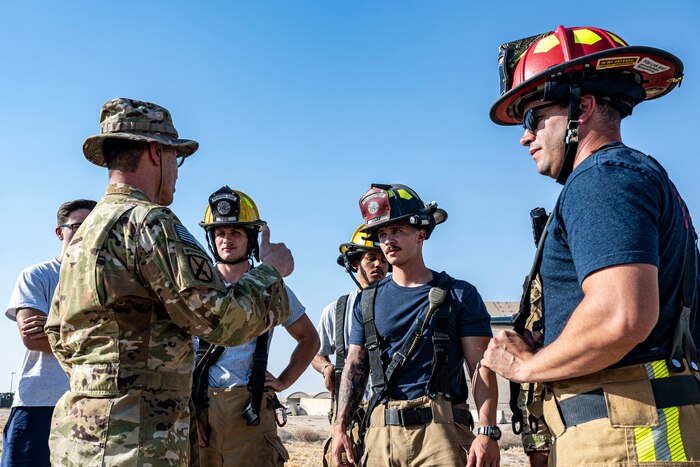
“As the exercise went on, I got more confident with the calls and how to relay information,” said Spc. Carter Smith, C-12 RFC flight operations specialist. “If something like this ever happens for real, I’ll know exactly what to do.”
Chief Warrant Officer 3 Mark Escherich, C-12 RFC aviation safety officer, emphasized that the training also provided an opportunity for cross-unit familiarization. After the exercise, he walked firefighters through the C-12’s emergency systems, including fuel ports, battery access points and engine shutdown procedures.
“Having that face-to-face time matters,” Escherich said. “If firefighters are ever first on scene, now they know how to secure the aircraft and mitigate hazards quickly.”
The exercise highlighted both successes and areas for improvement. Units identified differences between Army and Air Force fuel spill policies, validated contact information and updated communication processes to account for frequent personnel rotations.
“Bottom line: The faster you can get first responders on scene with the right information, the more likely you are to save lives,” Lansink said. “That’s why we practice.”